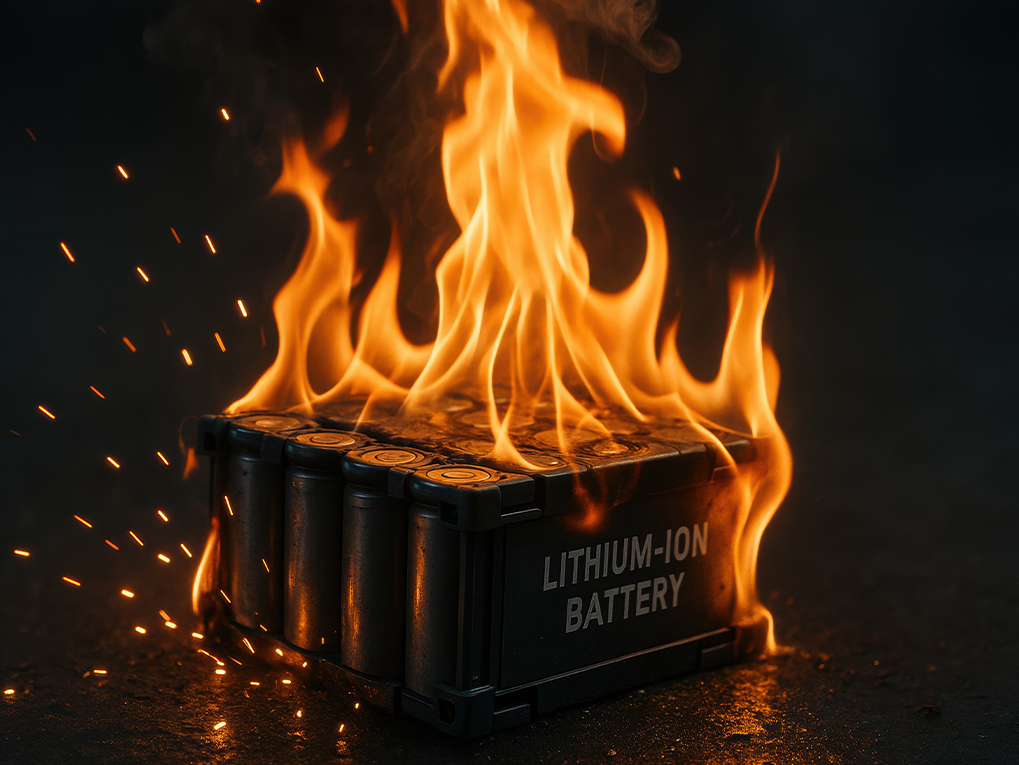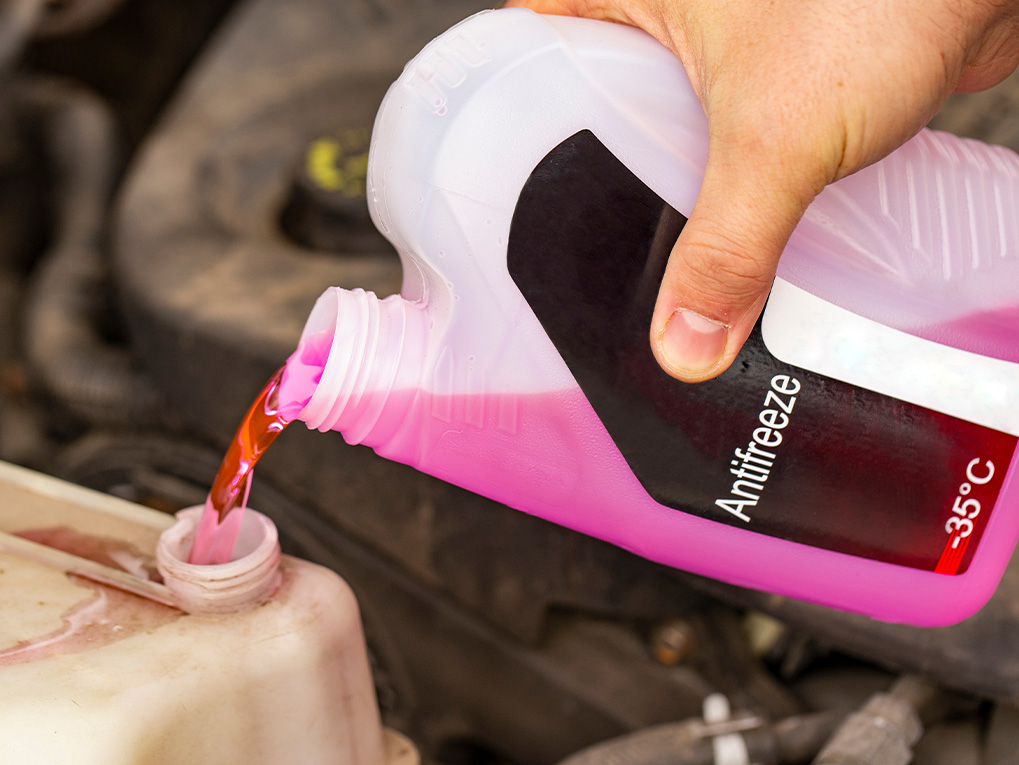
Fancy reading a 60-page strategy document to reduce downstream fire risk? No? That’s handy, as we didn’t much fancy writing one, but we did create a simple framework you can use…
Reducing downstream fire risk starts with the everyday disposal decisions made on your site – often by people who aren’t thinking about fire at all. Under the UK Waste Duty of Care, your responsibility for waste doesn’t end when it leaves your site. If that waste contributes to a fire further down the chain, the question won’t just be “what happened?” – it will be “what steps were taken to prevent it?”
If you’ve already explored the common causes of waste and recycling facility fires, this article focuses on implementation – the practical steps you can take to prevent those causes from being triggered in the first place.
This 4-week framework will enable you to reduce downstream fire risk in a structured, manageable way – making sure your waste doesn’t become someone else’s emergency.
- What You’ll Achieve in Four Weeks
- Week One: Establish Control at the Point of Generation
- Week Two: Build Understanding, Not Just Awareness
- Week Three: Align Storage, Handling and Internal Checks
- Week Four: Lock It In with Documentation and Review
- Parting Thoughts
- Reduce Downstream Waste Fire Risk with Hazport
What You’ll Achieve in Four Weeks
If you follow the steps in this framework, by the end of a 4-week period, you should be able to say:
- “High-risk waste can’t accidentally end up in general waste or mixed recycling.”
- “It’s not just throwing something in a bin; it affects real people.”
- “Segregated waste stays segregated – from point of generation to final disposal.”
- “Our paperwork and waste descriptions tell the true story of our waste.”
Amongst many other positive statements, all of which are much better than: “We’re ever so sorry our waste caused a huge fire in your recycling facility, we’ll try not to do it again…”
After all, who wants to say that?
Before You Start
Take just 15 minutes to save potential weeks of frustration and give the framework its best firefighting chance:
- Pick a project owner who can actually influence day-to-day behaviour – perhaps someone in facilities or ops.
- Choose your top three fire-relevant waste streams on site – no need to try and fix everything at once, and overcomplicating things.
- Decide what ‘good’ looks like (e.g. batteries never appear in general waste, aerosols always go into a dedicated container, etc.)
With these things in place, you’re good and ready to run your 4-week downstream fire risk reduction plan at any time – no need to wait for a new month, a full moon, or any other strange starting period to get fire safety management in place for your site.
Week One: Establish Control at the Point of Generation
Most downstream fire risk is introduced where waste is generated, not in the waste hold. Week one is all about removing guesswork so high-risk items don’t drift into the general waste or mixed recycling streams.
Here’s the plan for week one:
 #1 Identify your site-specific fire-risk wastes
Generic lists are useful, but you need to capture the reality of your facility. Common examples include:
- Lithium batteries and ‘battery-in-disguise’ items (vapes, power banks, handheld scanners, etc.)
- Aerosols and pressurised containers (even when they feel empty).
- Flammable liquid residues / solvent-contaminated materials.
- Oily rags and absorbents (self-heating risk).
- Oxidisers and reactive chemicals, and incompatibles.
We wrote a whole blog on the common causes of waste and recycling facility fires that can help you determine which wastes your facility produces that could be a secret (or not-so-secret) downstream fire risk.
#2 Map where they’re generated
Maintenance bays, goods-in, IT rooms, cleaning stores, production lines… fire-risk waste appears in predictable places – places your waste containers should live too.
 #3 Put dedicated, clearly labelled containers at the source
Don’t place a battery bin just ‘somewhere in the yard’ and hope everyone will use it. Put it where the disposal decisions happen and remove ambiguity with rules that don’t bend:
- Batteries NEVER go in general waste or mixed recycling.
- Aerosols are segregated EVEN if they seem empty.
- Oily rags DO NOT go in open bins or piles; they go into a dedicated lidded container.
Week one outcome: Nobody on site should have to think about or decide where risky waste goes; the system should decide for them and be simple enough to become second-nature.
Week Two: Build Understanding, Not Just Awareness
Mis-segregation is usually down to habit, assumptions, or uncertainty. These are all things that signage and posters can help with, but are not enough by themselves to rectify.
Week two is about short, role-specific training that explains why the rules exist.
 #1 Train the people who actually handle waste
Think maintenance, cleaners, production operatives, facilities teams – keep it simple and on the floor at the waste points. A 15-minute or so session with occasional refreshers will be far more effective than a three-hour presentation once in a blue moon that sends everyone to sleep – including the presenter.
#2 Explain downstream consequences in plain language
The illustrations and examples hit home because they’re real and understandable:
- Batteries often ignite after they’re damaged in handling or processing, not at the bin.
- Aerosols can rupture when heated or crushed, as opposed to when sitting in the bin.
- Oily rags can self-heat and combust if not contained properly.
#3 Reinforce with visuals where waste is generated
This is where your posters and signage come into play – as a reinforcement, not as the only form of training provided. A small prompt at the point of decision beats a long policy hidden in an old folder on a dusty shelf.
Week two outcome: Staff understand that this isn’t about micro-managing or box-ticking but about preventing your waste from becoming someone else’s emergency.
Week Three: Align Storage, Handling and Internal Checks
This is where good segregation at source can easily be undone – bins get swapped, waste is consolidated to ‘save space’, lids are left open, and the waste streams quietly recombine – creating exactly the kind of conditions that
lead to downstream incidents.
Week three is about keeping your well-established system intact under the day-to-day pressures of a busy workplace.
#1 Review how segregated waste is stored and moved
Check:
- Where it sits before collection.
- Whether it’s moved through busy areas.
- Whether it’s beingconsolidated (and whether it should be).
#2 Re-check the basics that prevent escalation
High-risk wastes should be:
- Kept away from heat sources and ignition points.
- Not stored next to combustibles.
- Not building up beyond sensible volumes.
- Stored in appropriate containers.
#3 Add a light-touch internal check
Something like a weekly 10-minute audit, with a simple walkaround by your designated project owner, can work well if kept consistent. They can spot-check the fire-relevant streams and correct any issues early – quietly and constructively – before bad habits have the chance to settle.
Week three outcome: Segregation still looks right on a Friday afternoon, not just after a Monday toolbox talk or brief audit.
Week Four: Lock It In with Documentation and Review
This is where ‘what we do’ becomes ‘how we operate’, and where your Duty of Care becomes real-world practice and second nature for everyone.
Under the UK Waste Duty of Care, businesses must take reasonable steps to prevent waste from causing harm. That responsibility includes taking reasonable steps to prevent waste from being misdescribed, mis-segregated, or packaged in a way that creates avoidable risk further down the chain.
 #1 Check waste descriptions and paperwork match reality
If your documentation doesn’t reflect what’s actually in the container, risk travels downstream under the wrong label and poses a risk to all who come into contact with it.
Always review:
- Waste descriptions for your key streams.
- Container labels.
- Any recurring contamination and mis-segregation issues.
#2 Confirm acceptance criteria with your waste contractor
Ask (and document):
- What must be segregated.
- How it should be packaged.
- What they will reject – and why.
This will help prevent the classic “it’s never been a problem before” surprise.
#3 Capture the process in usable formats
Forget 40-page handbooks and long-winded SOPs. Instead, create tools people will actually use, and genuinely see the value in:
- One-page waste handling summaries for each stream.
- A simple waste flow diagram poster.
- New-starter refresher notes.
- Short and engaging toolbox talks and micro-training clips for common issues.
#4 Set a trigger-based review cycle
Don’t just establish this entire system and leave it to the wind; review your system:
- After process changes.
- Whenever new products or materials are introduced.
- After near-misses, rejected loads, or contamination and mis-segregation issues.
Week four outcome: The system survives staff changes and turnover, busy periods, and those pesky “we’ll deal with it later” moments.
Parting Thoughts
Waste facility fires cannot really be chalked up to a simple case of ‘bad luck’. In almost every case, they’re the result of disposal decisions being made without thought or understanding of what happens downstream, and who may be at risk.
This 4-week framework is about removing ambiguity and building habits that make the safe (and right) option the default, starting where the risk enters your waste stream.
If you want the ‘causes and culprits’ deep dive, see our blog: Common Causes of Waste and Recycling Facility Fires.
 Reduce Downstream Waste Fire Risk with Hazport
At Hazport, we remove the guesswork and help businesses reduce downstream fire risk by removing ambiguity from hazardous waste handling. From on-site support and waste audits to ADR-compliant packaging, and compliant collection and transport to final disposal, we make sure your waste leaves your site safely – and stays safe.
No more waiting, guessing or wondering – just safe, compliant outcomes that stand up to scrutiny and make your audits pain-free.
Our experienced team is ready to support you every step of the way, from identifying and segregating waste to final disposal – we can even help you with waste audits!
Contact us today to learn more about our hazardous waste disposal services and how we can help you create a safer and more compliant waste management system for your facility.