Categories
Chemical Waste Hazardous Waste

Common Causes of Waste and Recycling Facility Fires

Do you know the common causes of waste and recycling facility fires? How about the business wastes most likely to trigger them?

Waste and recycling facility fires rarely start with something dramatic. More often than not, it’s an item deemed as ‘safe’ put in the wrong bin, or a small amount of contamination in the wrong container. This usually becomes a problem later – once it’s been compacted, shredded, baled, crushed, heated or mixed with other materials.

This matters for UK businesses because the biggest levers for prevention sit upstream, where the waste is produced. So let’s take a dive into that to find out how you can avoid a downstream fire.

  • The Business Wastes Most Likely to Cause Fires
  • Why Waste Fires Occur Downstream
  • A Lecture Free Note on Waste Compliance
  • A Practical 30 Day Framework to Reduce Downstream Fire Risk
  • Closing Takeaway
  • Remove the Guesswork (and the Fire Risk) with Hazport

The Business Wastes Most Likely to Cause Fires

Let’s look at the most likely hazardous business wastes to cause downstream fires and what to do about them, as well as a few misconceptions cleared up – no scare tactics, no jargon, just information that can help your business avoid these issues.

Lithium Batteries
Most common culprits:

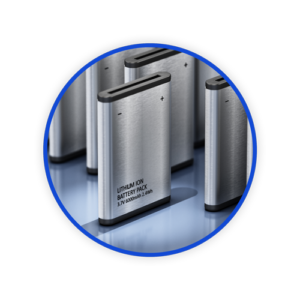
  • Batteries and battery packs used in power tools, laptops, e-bikes and e-scooters.
  • Vapes (especially disposables), power banks, handheld scanners and radios.
  • Equipment with embedded cells, such as lights, alarms, sensors and small electronics.

Cause of fire:

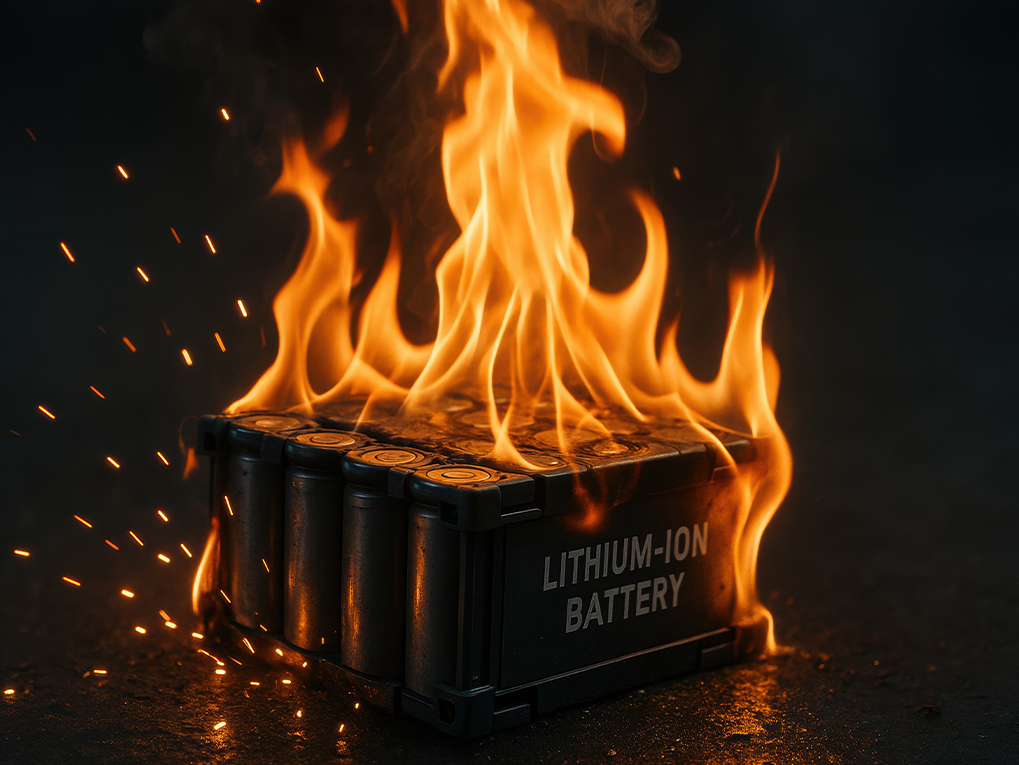
When damaged, lithium batteries can enter thermal runaway – often after compaction or shredding – creating intense, rapidly developing fires that are difficult to extinguish.

Common misconception:

“Surely they can’t do much damage, they’re tiny.”

Small cells can produce enough heat to ignite surrounding paper, plastics, films and residual flammable contamination. The issue isn’t just the battery; it’s the fuel package around it.

Tips for avoiding lithium battery fires:

  • Never place batteries in general waste or mixed recycling.
  • Set up a dedicated battery segregation point where batteries are removed at source.
  • Tape terminals to prevent short circuits.
  • Store batteries in a non-combustible lidded container; keep damaged or swollen batteries separate and clearly marked.
  • Keep storage cool, dry and away from flammables.
  • Train staff to spot ‘battery-in-disguise’ items like vapes and other small electronics.

See our complete guide to lithium battery disposal for UK businesses.

Aerosols and Pressurised Containers

Most common culprits:

  • Aerosol lubricants, spray paints, cleaning sprays, adhesive sprays.
  • Camping gas cylinders, CO2 cartridges and small LPG cylinders.
  • Nitrous oxide canisters (increasingly seen in waste streams).

Cause of fire:

Even ‘empty’ aerosols often retain propellant or residue. When heated or crushed, they can rupture – turning into a projectile and dispersing flammable product. The Fire Protection Association notes flammable aerosols can be more hazardous than some flammable liquids because containers can rupture and spread burning liquid.

Common misconception:

“It’s safe as long as it feels empty.”

An aerosol isn’t safe because it feels empty; it’s safe when it has been properly managed as pressurised waste.

Tips for avoiding aerosol and pressurised container fires:

  • Segregate aerosols and canisters into a clearly labelled, dedicated container.
  • Don’t puncture or crush unless you have a compliant system designed for it.
  • Keep away from heat sources and direct sunlight.
  • If you produce high volumes of this waste, implement a documented process as part of your site’s dangerous goods and fire safety controls.
Flammable Liquids and Solvent-Based Wastes

Most common culprits:

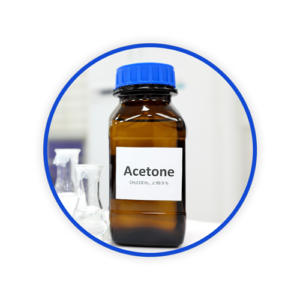
  • Solvent thinners, acetone, degreasers and fuels.
  • Solvent-based paints, varnishes, resins and adhesives.
  • Contaminated rags, wipes, absorbent pads and spill kits.

Cause of fire:

Flammable liquids produce vapours which can ignite easily in the right concentration. UK workplaces are expected to manage these hazards in accordance with the Dangerous Substances and Explosive Atmospheres Regulations (DSEAR).

Common misconception:

“There’s only a little bit left; it won’t cause any harm.”

Small residues still give off gas vapours, and many small residues together can create a higher volume of vapour.

Tips for avoiding flammable liquid and solvent-based fires:

  • Keep flammable liquids in original containers where possible, sealed and upright.
  • Segregate flammable liquid waste from oxidisers and reactive chemicals.
  • Store in suitable, labelled containers and secondary containment such as bunding where appropriate.
  • Don’t ‘make space’ by combining different solvent wastes unless you’ve confirmed compatibility and that your waste contractor will accept it.

Oily Rags and Self-Heating Wastes

Most common culprits:

  • Rags or wipes with linseed oil, wood oils, some paints and stains.
  • Oily absorbents from maintenance work (hydraulic oils, lubricants).
  • Some organic/warm loads such as compostable residues and biomass fines.

Cause of fire:

Self-heating is an internal chemical process in which oxidation generates heat; if the heat can’t escape, the temperature rises until ignition.

Common misconception:

“Spontaneous combustion is a myth.”

It’s not. It’s spontaneous human combustion that’s the myth. Spontaneous combustion, in itself, is a recognised ignition mechanism, especially in certain oils and porous materials that trap heat.

Tips for avoiding oily rag and self-heating waste fires:

  • Don’t let oily rags accumulate in open piles or general waste.
  • Use a dedicated, lidded metal container for oily rags and absorbents.
  • Keep this stream separate from general combustibles like paper, card and plastics.
  • If you frequently generate oily absorbents, create an SOP and train staff on proper handling and disposal.

Oxidisers and Reactive Chemicals

Most common culprits:

  • Swimming pool and spa chemicals (oxidisers), peroxides, certain laboratory chemicals.
  • Strong cleaning oxidisers used in food production, facilities, healthcare.

Cause of fire:

Oxidisers don’t have to ‘burn’ themselves to create a fire – they can accelerate combustion or react dangerously with organics or other incompatible materials.

Common misconception:

“It’s not flammable, so it can be stored with general chemicals.”

Oxidisers are often worse when mixed incorrectly because they can intensify fires in surrounding materials. Guidance on incompatibility is blunt: mixing incompatible chemicals and wastes can create heat, over-pressurisation, and fire.

Tips for avoiding oxidiser and reactive chemical fires:

  • Keep oxidisers in original packaging, sealed, dry and segregated from organics and flammables.
  • Never dispose of ‘unknowns’ by combining them.
  • If you have multiple chemical streams, implement a compatibility check process – this could be as simple as a flowchart poster or checklist.
Hot Loads and Legacy Ignition Sources

Most common culprits:

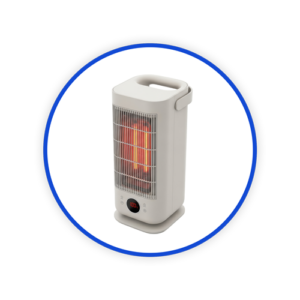
  • Ashes, hot metalwork residues, heat lamps, heaters.
  • Smoking materials in general waste.

Cause of fire:

Smouldering material can sit unnoticed in a skip or bale until oxygen is introduced during movement.

Common misconception:

“If it’s not visibly glowing, it’s cooled down enough to be disposed of.”

Have you ever cleaned a firepit or chiminea the morning after using it? They’re usually still warm, right? Ash and fine residues can retain heat for a long time – especially when insulated by a bag, mixed with cardboard, or stored near other combustibles. It doesn’t need flames at the point of disposal to become a downstream ignition source.

Tips for avoiding a hot load and legacy ignition fires:

  • Don’t dispose of warm or hot materials until fully cooled and verified.
  • Use metal bins for ash-like materials and keep separate from combustibles.

Why Waste Fires Occur Downstream

Which of your own waste streams could spark (pardon the pun) one of these scenarios tomorrow for your local waste or recycling facility?

There are several reasons hazardous waste can cause downstream fires, and if your business produces any hazardous waste, it’s worth knowing.

Hidden Ignition Sources

Items that can ignite when damaged – especially lithium batteries – enter general waste or recycling streams and then get crushed or punctured during handling or processing. The Waste Industry Safety and Health Forum (WISH) highlights battery fires occurring in reception, storage, and processing areas, as well as being a risk to picking-cabin workers.

Pressurised Containers Rupturing

Aerosols and gas canisters can burst under heat or pressure, becoming projectiles and spreading burning material.

Flammable Vapours Finding an Ignition Point

Solvent-based wastes can release vapours that ignite if stored/handled poorly. The HSE’s guidance on flammable liquid storage focuses on controlling vapours and ignition sources.

Self-Heating (Spontaneous Combustion)

Some wastes generate heat internally (oxidation/exothermic reactions). If that heat can’t escape, the temperature rises until ignition.

A good example of this is hay. Hay spontaneously combusts when moisture levels are high during baling. This causes microorganisms to break down organic matter, generating immense internal heat. That’s why you should always make hay while the sun shines…

Incompatible Chemicals Reacting

Mixing ‘unknowns’ or storing reactive materials together can generate heat, gases, or violent reactions. Chemical incompatibility guidance is clear: mixing incompatible wastes can cause fire or over-pressurisation.
A Lecture-Free Note on Waste Compliance

Under the UK Waste Duty of Care, businesses must take reasonable steps to prevent waste causing harm to people or the environment. This doesn’t only apply to your site; it also applies downstream at every stage of the waste journey. In practice, that means storing waste safely, describing it accurately, and keeping high-risk items like batteries, aerosols and flammable residues out of the wrong streams.

The fire risk doesn’t disappear when waste is incorrectly segregated or misclassified; it moves downstream, but the liability and consequences remain with the waste producer.

Your Waste Duty of Care isn’t just paperwork or unnecessary regulation; it’s about stopping your waste from becoming a risk to someone else. Correct segregation, storage and waste descriptions are how businesses meet that obligation in practice.

Closing Takeaway

Waste facility fires are rarely caused by ‘bad luck’. They’re usually caused when everyday waste decisions are made without understanding how that waste behaves later in the chain. One preventable item being treated as ordinary waste is all it takes.

If your business produces any of the waste types or streams above, the goal isn’t to panic; it’s to put clear controls in place so the risk doesn’t travel downstream. Getting segregation, handling, and storage right at the source, and backing it up with ongoing training and culture is one of the most effective – and overlooked – fire-prevention measures available.

Remove the Guesswork (and the Fire Risk) with Hazport

At Hazport, remove the guesswork from hazardous waste and make disposal easy. Our mobile chemists, fast response times, ADR-compliant packaging, and end-to-end traceability through approved facilities make us a strong partner for your business.

No more waiting, guessing or wondering – just safe, compliant outcomes that stand up to scrutiny and make your audits pain-free.

Our experienced team is ready to support you every step of the way, from identifying and segregating waste to final disposal – we can even help you with waste audits!

Contact us today to learn more about our hazardous waste disposal services and how we can help you create a safer and more compliant waste management system for your facility.

Categories
Chemical Waste

How to Dispose of Antifreeze

Antifreeze might keep your systems running cool and smooth – but dispose of it incorrectly, and things can heat up fast for your business.

If your business services vehicles, runs a fleet, operates plant equipment or maintains HVAC/generator systems, there’s a good chance you’ll produce used antifreeze/engine coolant at some point. And when it’s time to change it, you need a plan, because improper antifreeze disposal can quickly become an environmental incident and a paperwork nightmare.

This guide is written for UK businesses, and we’ll cover what antifreeze is, whether it’s the same as coolant, why it’s often classed as hazardous waste, and how to dispose of antifreeze compliantly.

  • What Is Antifreeze?
  • Why Is Antifreeze Considered a Hazardous Waste?
  • Where Should I Pour Leftover Antifreeze?
  • What Not to Do with Leftover Antifreeze?
  • Where Does Antifreeze Go When Disposed of Correctly?
  • Antifreeze Disposal: A Practical Step-by-Step for Businesses
  • Can Antifreeze Be Recycled?
  • How Do You Neutralise Antifreeze?
  • Need Help with Antifreeze Disposal?

What Is Antifreeze?

Antifreeze and engine coolant are closely related chemical fluids, typically a mix of a glycol-based chemical and water used in engines and some cooling systems to control temperature and protect components. In plain terms, it helps stop systems freezing in winter, boiling in summer, and corroding over time. Antifreeze is closely tied to the term coolant, but there are differences.

Is Antifreeze the Same as Coolant?

Not exactly. They’re closely related, but they’re not the same thing.

Antifreeze (usually concentrate)

In most cases, antifreeze refers to a concentrated glycol-based product (often ethylene glycol, sometimes propylene glycol) blended with corrosion inhibitors and other additives. On its own, it’s typically not intended to be used neat in a vehicle cooling system.

Coolant/engine coolant (ready to use)

Engine coolant (or simply coolant) is the in-use fluid that circulates through the system. It’s usually a mixture of antifreeze and water, often around a 50:50 ratio (though manufacturers may specify different blends depending on application and climate).

What about ‘antifreeze coolant’?

People (and sometimes product labels) often use terms like ‘antifreeze coolant’ to mean one of two things:

  • Pre-mixed coolant (ready to pour straight into the system), or
  • Antifreeze concentrate sold with instructions to dilute before use.

Why is this important to know? Because if you’re searching for how to dispose of engine coolant, you’re typically dealing with the same waste stream used for antifreeze disposal – but classification can depend on what’s in it and what it’s been contaminated with.


Why Is Antifreeze Considered a Hazardous Waste?

Used antifreeze is commonly treated as hazardous because:

  1. The product itself can contain dangerous substances (depending on formulation).
  2. Once used, it can become contaminated with other hazardous materials (for example: oils, fuels, metals, or other workshop fluids).

That difference matters – because two containers of ‘used’ coolant on the same site can require completely different disposal routes.

UK waste classification uses EWC (European Waste Catalogue) codes to classify antifreeze correctly, and whether or not it’s hazardous:

  • 16 01 14* = Antifreeze containing hazardous substances (hazardous).
  • 16 01 15 = Antifreeze not containing hazardous substances (non-hazardous).

This difference in classification will affect the disposal route for antifreeze.


Where Should I Pour Leftover Antifreeze?

For businesses, the safest answer to this is:

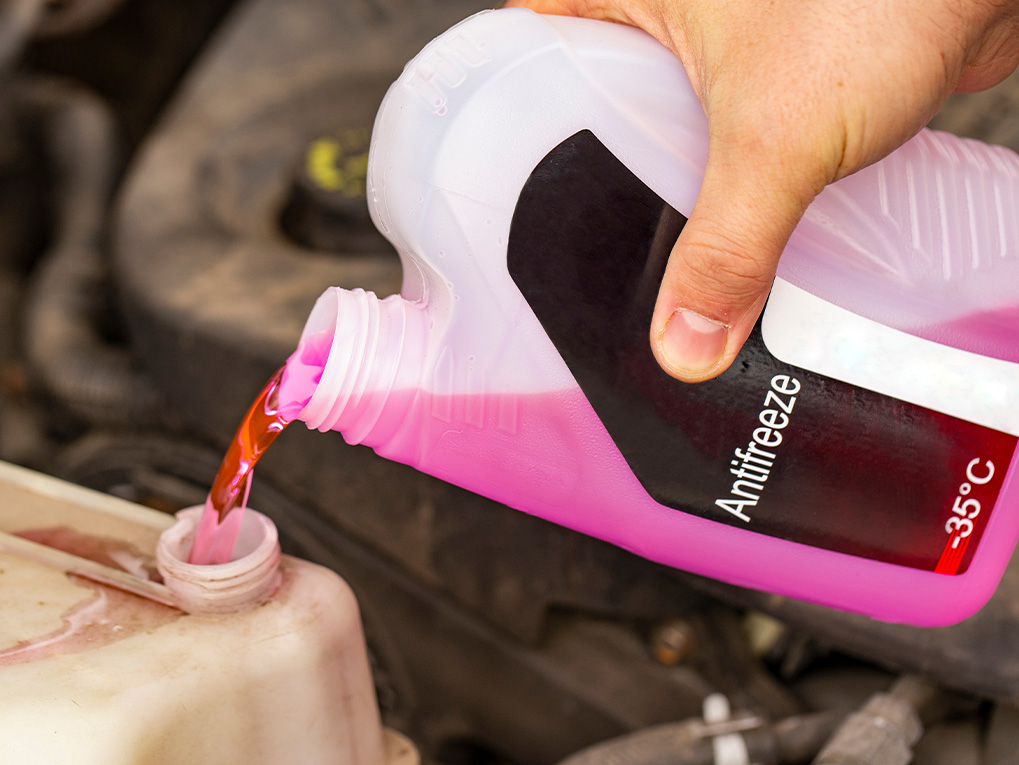
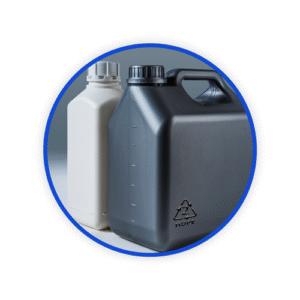
  • Pour it into a dedicated, compatible, sealable container (usually HDPE) that’s in good condition and kept closed when not in use.
  • Keep it inside secondary containment (bunding) away from drains.
  • Label it clearly (e.g., used antifreeze/engine coolant – pending disposal – hazardous/non-hazardous) and keep incompatible wastes separate.

What Not to Do with Leftover Antifreeze

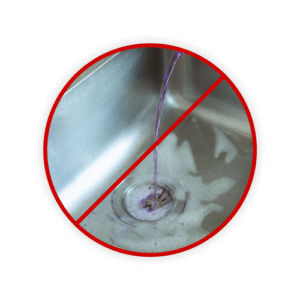
Never. Ever. Pour antifreeze, antifreeze coolant, or used engine coolant down a drain, toilet, sink, gully or outside drain – and don’t tip it onto the ground.

Glycol-based chemicals are highly polluting, and once it reaches drainage systems, it can end up:

  • In surface water drains (which often discharge straight to streams and rivers).
  • At a wastewater treatment works, where it can disrupt treatment processes.
  • Or in soil groundwater if it’s dumped outside or allowed to soak away.

It also poses a real risk to ecosystems, wildlife, and pets – spills can attract animals that enjoy its sweet taste, and ingestion can be fatal.

You also shouldn’t tip leftover antifreeze into IBCs or drums that previously held something incompatible, and definitely don’t decant it into a ‘mystery drum’. On that subject, please, for the love of all things sacred in the realm of compliance, don’t even have a mystery drum!

Additionally, the UK Vehicle Waste Classification guidance explicitly states that you must not mix antifreeze with other listed vehicle fluids such as oils, solvents, brake fluids, etc.


Antifreeze Disposal: A Practical Step-by-Step for Businesses

Here’s a simple step-by-step process you can follow on site to keep antifreeze disposal safe, compliant, traceable and most of all, drama-free. Remember too, that our experts are only a phone call away.

#1 Keep it clean (and separate) from the start

Before you even think about final disposal or paperwork, focus on prevention. Don’t mix antifreeze/engine coolant with other fluids – doing so makes classification harder, increases risk, and can push you into a more hazardous (and more expensive) disposal route.

#2 Identify what you actually have

Ask two quick questions:

  • Is it unused product (concentrate or pre-mix), or used coolant drained from a system?
  • Has it been contaminated (oil, fuel, ingress, metals, degreasers, ‘workshop soup’)?

This matters because used coolant can range from relatively straightforward to fully hazardous, depending on what’s in it.

#3 Classify it using the correct EWC code

The EWC codes for antifreeze are:

  • 16 01 14* = Antifreeze containing hazardous substances (hazardous).
  • 16 01 15 = Antifreeze not containing hazardous substances (non-hazardous).

#4 Store it safely on site

  • Use a compatible, sealable container (typically HDPE) in good condition.
  • Keep it closed, upright and bunded (secondary containment).
  • Label clearly: ‘Used antifreeze/engine coolant – pending disposal’ plus your classification where known.
  • Keep it away from drains and traffic routes (forklifts + chemical waste drums = preventable incidents).

#5 Use the right paperwork

In England and Wales, the paperwork you use will depend on the classification:

  • If it’s hazardous antifreeze (16 01 14*), it must move with a hazardous waste consignment note (HWCN).
  • If it’s non-hazardous antifreeze (16 01 15), it normally moves with a waste transfer note (WTN).

Whether it’s identification, classification or ensuring you have the right paperwork, a good waste partner can help you where needed and arrange testing or assessments, so you’re not guessing.

#6 Only hand it to authorised people

Your Duty of Care doesn’t end when the waste leaves your site. You must take reasonable steps to prevent escape/spillage, and to ensure your chosen waste carrier is properly authorised.

#7 Collection, transport and treatment

A compliant waste contractor will confirm that the classification and packaging of your waste are correct, collect the waste using suitable containment and vehicles, complete the relevant sections of your paperwork, and then take the waste to an authorised site for treatment.

#8 Keep your records and apply the waste hierarchy

Whatever type of waste you’re handling, you’re expected to apply the waste hierarchy, following its priority order where reasonable to do so. This helps ensure the most sustainable waste treatment routes are used.

So, how long do you need to keep hazardous waste consignment/waste transfer notes?

  • Hazardous Waste Consignment Notes (HWSNs) must be kept for at least three years.
  • Waste Transfer Notes (WTNs) must be kept for at least two years.

Can Antifreeze Be Recycled?

Sometimes, yes. If the antifreeze is suitable (and not heavily contaminated), it may be treated/recycled through specialist processes that purify it by removing contaminants, allowing it to be reprocessed into new antifreeze.

The right route depends on composition and contamination; it’s best not to assume it’s recyclable because it looks clean – classification comes first, then the best available option.


How Do You Neutralise Antifreeze?

On-site antifreeze neutralisation is not a recommended or typical compliance route for businesses producing coolant waste. This is because adding other chemicals to ‘treat’ antifreeze can actually create a new waste stream, new hazards, and new classification issues.

What you can do safely, however, is manage any spillages.

Here’s an easy way to safely manage an antifreeze spill:

  • Contain the spill.
  • Use absorbents.
  • Keep contaminated absorbents separate (these may become hazardous too).
  • Prevent any washdown to drains.

That’s a high-level overview at least, but we also have a blog on chemical spill response procedures you may find helpful.

Ultimately, if you need a treatment route for antifreeze, that should happen through a permitted facility as part of an agreed waste management solution – not improvised on the workshop floor.


Need Help with Antifreeze Disposal?

Hazport can help your business dispose of antifreeze using the ‘no guessing’ methodology. If your site regularly produces antifreeze (garages, automotive workshops, depots, plant maintenance, engineering sites, facilities teams, etc.), we can take the pain out of its compliant disposal.

  • Correct classification support (no more gambling on codes).
  • Compliant containers and segregation advice.
  • Scheduled collections that fit around your operation.
  • Consignment paperwork handled correctly.
  • Documented traceability and a straight-talking team when you need answers.

That’s the Hazport approach – hazardous waste made easy – fast response, clear guidance, and no jargon.

Contact us today to learn more about our chemical waste disposal services and how we can help you create a safer and more compliant waste management system for your facility.
Categories
Chemical Waste Hazardous Waste

Chemical Spill Response Procedure: Are You Doing It Right?

There may be no use in crying over spilt milk, but spilt chemicals… that’s a different story altogether!

Imagine you’re halfway through another normal workday, and someone knocks over a container – as the smell of chemicals hits the air, the panic sets in. What happens now?
Read on as we walk you through a wealth of valuable information that will help you ensure you have a safe and effective chemical spill response procedure in place.

From the basics of containment and cleanup to procedures and spill kits, join us as we remove the guesswork so you’re prepared, not panicked when accidents happen.

  • What Is a Chemical Spill?
  • The Potential Impacts of a Chemical Spill
  • The Four Pillars of Chemical Spill Control
  • The Hierarchy of Chemical Spill Management
  • Who’s Responsible for Chemical Spill Cleanup?
  • Why Choose Hazport for Spill Response Support?

What Is a Chemical Spill?

A chemical spill is the accidental release of a potentially hazardous substance that poses a risk to people, property or the environment. Spills can happen during production, transport, storage, use or disposal, and they vary widely in severity.

Most likely, you can recall at least one occurrence of a chemical spill being reported in the news, but whether it’s a small splash of solvent in a lab or a major leak of industrial chemicals, every spill must be taken seriously.

What Is Chemical Spill Safety?

Chemical spill safety is all about being ready before something goes wrong. It means having the right procedures, training and equipment in place to prevent spills where possible – and to respond quickly and safely if and when they do happen.

It’s not just about cleaning up the mess – it’s about protecting your staff, your site, the public and the environment. Chemical spill safety includes:

  • Always storing chemicals properly.
  • Training staff to recognise and manage risks.
  • Ensuring your site is equipped to deal with accidents.
  • Having a straightforward, practised spill response procedure.

Getting this right is about much more than ticking a compliance box – it saves lives, prevents extensive damage, and keeps your business moving even when accidents happen.


The Potential Impacts of a Chemical Spill

Chemical spills aren’t just messy – they’re also dangerous. The impacts can be far-reaching and long-lasting, especially if the response is slow or mismanaged, as can happen when tackling a spill unprepared.

Here’s what’s at stake when a chemical spill happens:

  • Serious harm to health – Exposure to certain chemicals can lead to burns, breathing problems, or even long-term conditions like cancer. Some gases are toxic in tiny amounts. Others can ignite with the slightest spark.
  • Risk of fire or explosion – Flammable chemicals don’t need much encouragement to cause major incidents. Without fast containment, a small spill can quickly become a full-scale emergency.
  • Damage to property – Some chemicals can eat through flooring, corrode metals, or render entire rooms unsafe to use. In worst-case scenarios, fires caused by spills can bring down whole buildings.
  • Environmental fallout – Some chemicals can seep into soil, drains and nearby watercourses. This can destroy habitats, poison wildlife and lead to long-term contamination of land and water.
  • Costly disruption – Aside from the cleanup bill, spills often shut down operations, trigger investigations and delay projects – especially when you need emergency contractors to step in.
  • Regulatory consequences – If your spill affects the environment, or you fail to act fast enough, you could face enforcement action, fines or reputational damage that’s harder to clean up than the spill itself.

What’s the takeaway? Every minute counts. A well-prepared spill response can dramatically reduce the scale of the damage, eliminating the need to guess in the moment when action matters most.

So let’s dig into a chemical spill response procedure and see how you can handle such an incident.


The Four Pillars of Chemical Spill Control

The most effective response to a chemical spill is precisely that – a response, not a reaction. A fast, safe and compliant response hinges on four key pillars:

  • Spill prevention
  • Spill control and containment
  • Spill cleanup
  • Reporting and review

Let’s look at each pillar in a little more depth.

Pillar I: Spill Prevention

Many businesses focus on cleaning up, but real chemical spill safety starts before one happens. The most effective response is to prevent spills in the first place, eliminating the need for a response – however, accidents can and do happen.

This involves:

  • Storing chemicals and chemical waste securely and correctly.
  • Using secondary containment (like drip trays or bunds) when appropriate.
  • Conducting regular inspections and maintenance.

Need an audit? Hazport offers a full site audit to help you identify what’s working well and any gaps or areas for improvement.

Prevention may not feel like a ‘response’ in the typical sense of the word, but it’s your first and most effective line of defence.

Pillar II: Spill Control and Containment
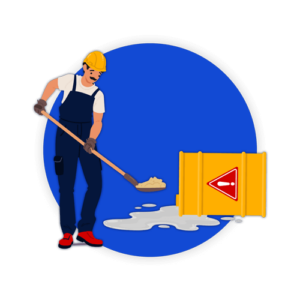
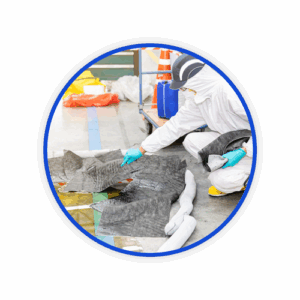
If a spill occurs despite your best prevention efforts, the top priority is to contain it as quickly as possible to prevent spread and exposure. This is where your chemical spill kit comes in (always ensure your site is equipped).

As a rule of thumb, a chemical spill kit should contain:

  • Absorbent pads
  • Neutralisers (for acids/bases)
  • PPE
  • Disposal bags and labels
  • Instruction for use

Your team should also understand how to handle hazardous waste in an emergency, and be trained to follow your chemical spill response procedure, which includes:

  • Raising the alarm and assessing the risk*.
  • Putting on the appropriate PPE.
  • Stopping the source of the spill if safe to do so.
  • Containing the spill using absorbents, booms or barriers.
  • Ventilating the area if required.

Spill containment is critical – it buys time and reduces the risk of wider harm.

*When assessing the risk, producers need to understand exactly what has been spilt before anyone tackles the spill. Sometimes, more danger and harm can be created from tackling an unknown spill with the wrong method.

Pillar III: Spill Cleanup

Once the immediate risk is controlled, the chemical spill cleanup begins. This step must be carried out carefully to avoid exposure or secondary contamination. This involves:

  • Using appropriate absorbents or neutralisers.
  • Carefully collecting waste and contaminated materials.
  • Labelling and storing waste in line with hazardous waste regulations.
  • Arranging for compliant disposal via a licensed provider (like Hazport 😉).

In the cleanup stage, it’s crucial to get this right and avoid a dangerous cleanup on your own or without expert guidance.

Report spilled-Person on computerPillar IV: Report and Review

This is another critical stage and one that’s easily overlooked – we’re only human, so once the spill has been contained and cleaned up, it’s all over, right?

Wrong. After any chemical spill, you must:

  • Report what happened.
  • Review the root cause.
  • Check if your procedures or training need updating.
  • Refresh your risk assessments and COSHH documentation.

Hazport can assist with spill procedure training – from basic spills like oils to more complex spills such as aggressive chemicals.

If it’s a serious spill, you’ll also need to report it to the Environment Agency or HSE. Don’t bury the incident – use it to strengthen and inform your future preparedness.


The Hierarchy of Spill Management

The closer you stop it, the less damage it does.

Each spill has to be taken at face value, as does the way we deal with them, but in any case, the faster you act and the closer to the source you contain it, the better your outcome will be. Here’s a handy framework to help you prioritise the right actions, in the correct order.

#1 Contain at the Source

Best-case scenario

If you can stop a spill where it’s happening, this is the best option. It might mean turning off a valve, standing up a container, or sealing a leak, but you’ll be stopping damage before it begins.

Why it matters: It’s quicker, safer and cheaper to contain the spill right at the source.

#2 Contain Close to the Source

Next best thing

If you can’t stop it directly at the source, contain it as close as possible. Use absorbent socks (not the ones on your feet…), spill booms, or bunds to stop the spread. The aim here is speed and precision.

Why it matters: Containing the chemical close to the source limits how far it can travel, reducing cleanup time and risk.

#3 Contain on the Surface

Time to act fast

If the spill has started spreading, try to stop it from entering drains, cracks, or unsealed ground. This is where quick access to your spill kit makes a world of difference.

Why it matters: Surface-level spills are easier to control, but only if you act quickly.

#4 Contain in the Drainage System

The danger zone

If the spill has made it into your drains, your priority is  to stop it from going any further. Use drain covers, mats, or inflatable bungs if trained (you, not the bungs…). This is a critical moment to prevent environmental harm.

Why it matters: Spills in drains can travel quickly and widely, leading to regulatory consequences.

#5 Contain on or in a Watercourse

The danger zone

If the chemical reaches a river, stream or surface water, containment is still possible, but your options are limited, and the risks are high. You must notify the Environment Agency immediately and bring in specialist help.

Why it matters: At this stage, you’re no longer just cleaning up – you’re protecting public health and ecosystems.

As noted earlier in this blog, the best spill response is prevention. But the second best is having a prepared response before the damage spreads. This hierarchy can help to guide your actions when every second counts.


Who’s Responsible for Chemical Spill Cleanup?

Ultimately, the responsibility for a chemical spill lies with you, the waste producer. Under the UK hazardous waste laws and regulations, you’re required to ensure that any spill is managed safely and that the resulting waste is classified, labelled and disposed of properly.
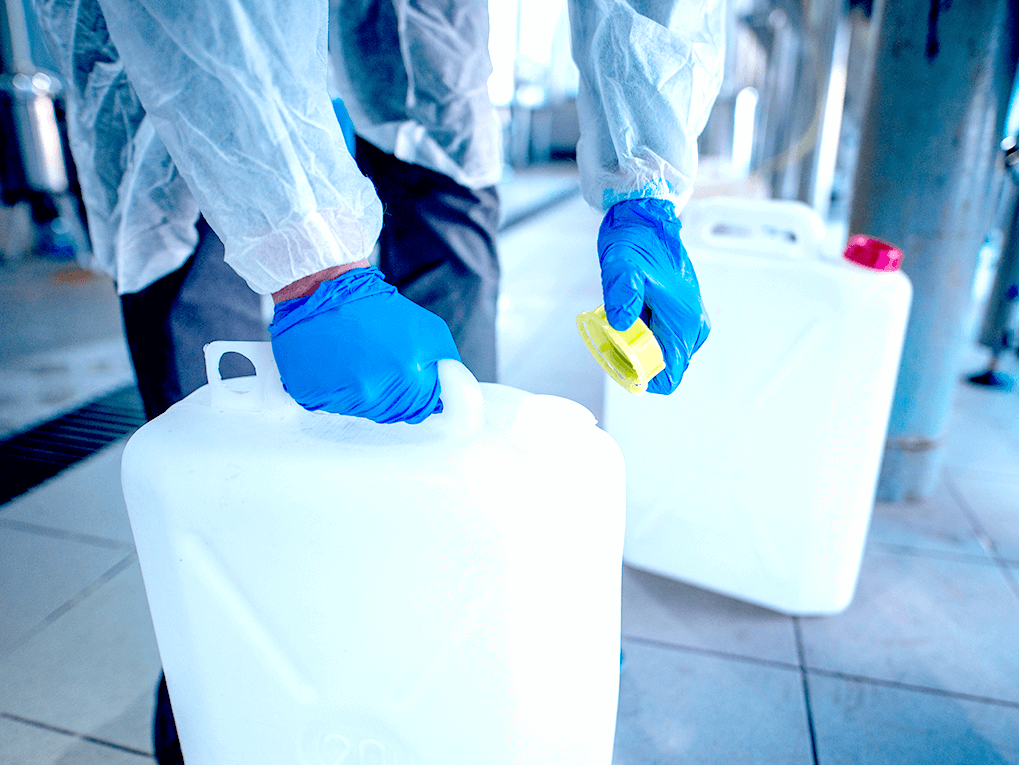
Even once the waste has left your site, you’re still legally accountable for what happens with it. That’s why having a clear plan and a competent waste partner is so important.


Why Choose Hazport for Spill Response Support?

At Hazport, we understand the importance of getting your chemical spill response procedure right. We help businesses across the UK prepare for, respond to, and recover from chemical spills with:

  • Expert-led waste audits and risk assessments.
  • Customised chemical spill kits and spill station servicing.
  • Staff training and emergency support.
  • Fast, compliant waste collection and disposal.

Whether you’re dealing with a one-off spill or building a site-wide spill response plan, we can remove the guesswork to make it simple, compliant and stress-free.

Contact us today to learn more about our chemical waste disposal services and how we can help you create a safer and more compliant waste management system for your facility.

Get In Touch

Categories
Chemical Waste

How to Dispose of Chemical Waste
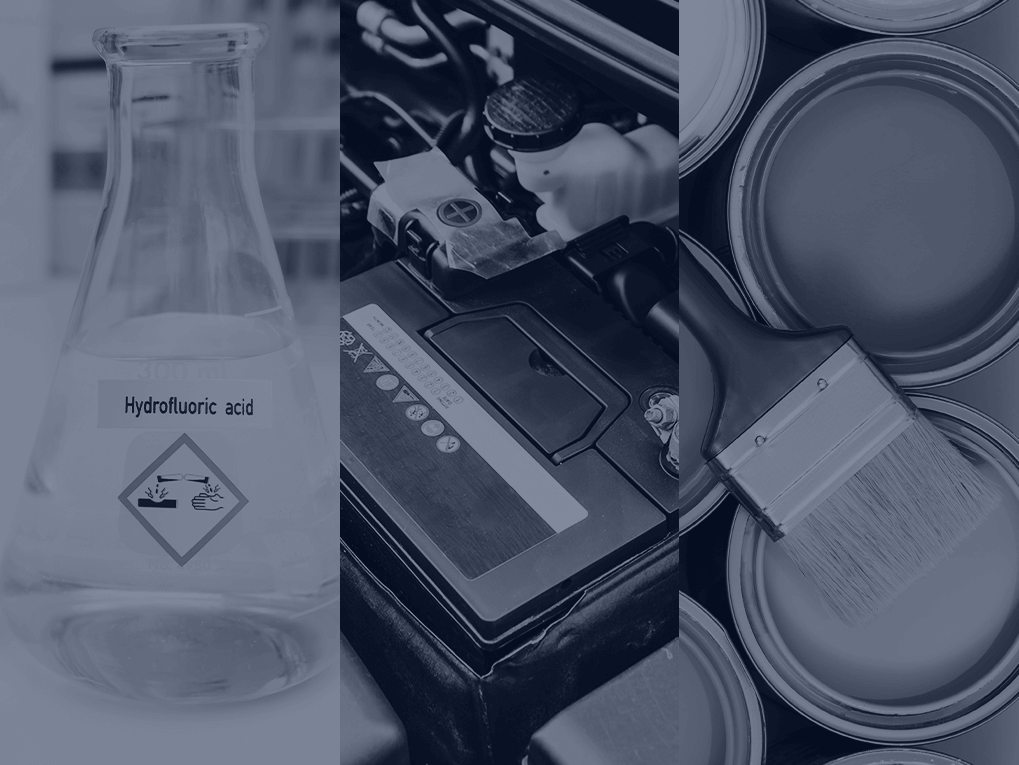
Chemical waste can be scary, but not knowing how to dispose of chemical waste correctly is terrifying!

Whether you’re running a laboratory, a hospital, a factory, or even a small office, knowing how to handle and dispose of chemical waste safely is crucial. Allow us to guide you through the various methods and best practices for chemical waste disposal.

From understanding chemical waste and its associated risks to learning best practices for storage and disposal, we’ll cover everything you need to know to manage chemical waste responsibly. Let’s dive in and remove the guesswork so you can make a significant impact with sound chemical waste management.

Understanding Chemical Waste and Its Risks

So, what is chemical waste?

It refers to any discarded material that either contains dangerous chemicals or has come into contact with them. This material can exist in various forms – solid, liquid, or gaseous – and may pose risks to human and environmental health.

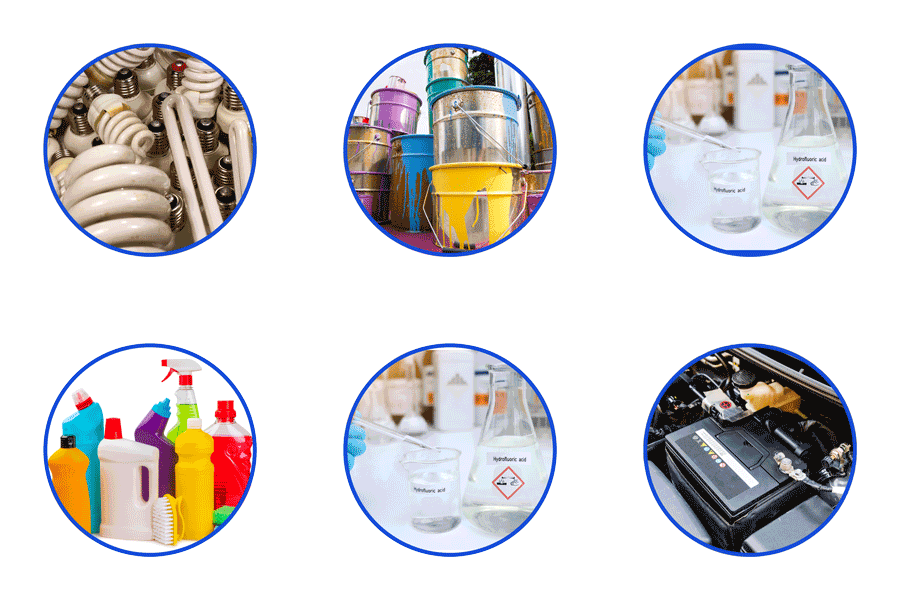
Examples of chemical waste include waste electrical items, cleaning products, waste oils, paints, solvents and printer toner and ink cartridges.

If chemical waste is disposed of improperly it can pose a significant risk to both human health and the environment. Some of the key dangers include:

Health Risks:

  • Acute toxicity: Immediate health problems from a single exposure.
  • Chronic toxicity: Long-term health effects from repeated exposure.
  • Irritation: Skin and mucous membrane irritation.
  • Sensitisation: Allergic reactions to chemicals.
  • Carcinogenicity: Increased risk of cancer.

Environmental Impact:

  • Water pollution: Contamination of water sources, affecting wildlife and human health.
  • Soil and plant contamination: Leaching of harmful chemicals into the soil, affecting plant life and potentially contaminating groundwater.
  • Toxic sites: Areas unsuitable for habitation due to chemical contamination.

And that’s without listing all the safety hazards such as explosions and fires, contaminated drinking water and the risks posed to waste workers.

It’s crucial to dispose of chemical waste responsibly and compliantly to protect ourselves and our environment.

How to Store Chemical Waste

Before it’s time for disposal, you’ll need to be storing your chemical waste somewhere on-site and businesses in the UK are subject to stringent regulations regarding the storage and handling of chemical waste. These regulations, such as the Control of Substances Hazardous to Health (COSHH) are designed to protect workers, the public and the environment.

Here are some helpful tips for storing chemical waste compliantly:

  • Risk Assessment: Conduct a thorough risk assessment to identify potential hazards associated with the chemicals you handle and implement appropriate control measures.
  • Storage Area Design: Ensure that your storage area is adequately designed to prevent accidents and spills. Consider factors such as ventilation, lighting, and accessibility.
  • Labelling and Inventory: All chemical containers must be clearly labelled with the chemical’s name, concentration, hazard symbols, and any relevant safety information. Maintain an accurate inventory of all chemicals on-site.
  • Segregation: Store incompatible chemicals separately to prevent dangerous reactions.
  • Spill Containment: Have appropriate spill containment equipment, such as drip trays and absorbent materials, readily available.
  • Regular Inspections: Conduct regular inspections of your chemical storage area to identify and address any potential hazards.
  • Compliance with Regulations: Stay informed about and comply with all relevant UK regulations regarding chemical storage and handling.

Industry-Specific Considerations:

  • Manufacturing: Ensure that storage areas are designed to accommodate large quantities of chemicals and that appropriate ventilation systems are in place.
  • Laboratory: Store chemicals in a secure, well-ventilated laboratory. Implement specific safety measures for handling hazardous substances.
  • Retail: Store chemicals in a locked area, away from customers and children. Provide clear labelling and safety instructions.

By following these guidelines and complying with UK regulations, you can create a safe and compliant chemical storage environment.

How to Dispose of Chemical Waste

Got chemical waste to dispose of? You’re not alone – businesses all over the UK generate a wide range of chemical waste, from laboratories and hospitals to factories and offices.

As we touched on earlier, improper disposal can lead to serious environmental harm and hefty legal penalties, so here are some best practices for getting it right:

  • Avoid improper disposal: Never pour chemicals down the drain.
  • Use licensed waste carriers: Partner with reputable hazardous waste companies for safe transportation.
  • Follow disposal guidelines: Adhere to specific regulations and best practices for each type of waste.
  • Stay informed: Keep up-to-date on the latest regulations and disposal methods.
  • Waste Management: Implement a proper waste management plan to ensure that chemical waste is disposed of safely and legally.
  • Label and Segregate: Clearly label all chemical waste containers and segregate them based on compatibility to prevent hazardous reactions.
  • Minimise Waste Generation: Implement measures to reduce the amount of chemical waste generated, such as using more efficient processes or switching to less hazardous alternatives.
  • Train Employees: Provide training to employees on proper handling, storage, and disposal of chemical waste.
  • Develop Emergency Procedures: Have a hazardous waste emergency response plan in place to address spills, leaks, or accidents involving chemical waste.
  • Maintain Records: Keep accurate records of all chemical waste generated, stored, and disposed of. These records can be required for regulatory compliance and auditing purposes.
  • Consider On-Site Treatment: In some cases, it may be feasible to treat chemical waste on-site before disposal. Consult with a qualified professional to determine if this is appropriate for your business.
  • Seek Professional Advice: If you’re unsure about how to dispose of a particular type of chemical waste, consult with a hazardous waste management specialist or your local environmental health officer.

By following these best practices and working closely with hazardous waste experts, you can ensure that any chemical waste your business is producing is disposed of safely and responsibly, in compliance with UK regulations.

Safe Chemical Waste Disposal is Imperative

Understanding how to dispose of chemical waste safely involves knowing the specific waste disposal methods for different waste types. Regular waste collection and one-off clearances by licensed carriers ensure that even difficult waste, such as asbestos chemicals or ozone-depleting substances, is handled correctly.

If you’re looking for chemical waste disposal services, we’re happy to help! We’re a licensed hazardous waste carrier with the expertise to handle any type of chemical waste and ensure compliance.

Get in touch if you’d like help with your chemical waste.

Categories
Chemical Waste Hazardous Waste

What Is Chemical Waste?

What comes to your mind when you hear the term ‘chemical waste’? Hopefully, it’s not ‘What is chemical waste?’

But if it is, we’ve got you covered…

Read on as we remove the guesswork and define exactly what chemical waste is along with some examples and tips for handling it safely and in compliance with regulations.

What Is Chemical Waste?

Chemical waste refers to any discarded material that either contains dangerous chemicals or has come into contact with them. This material can exist in various forms – solid, liquid, or gaseous – and may pose risks to human and environmental health.

Examples of chemical waste range from substances with apparent hazards such as acids and pesticides, to seemingly safer but still potentially risky materials like cleaning products and paint.

So that’s the definition covered, but what about specific types of chemical waste? You might find some of them surprising…

Examples of Chemical Waste

A variety of chemical waste can be either hazardous or non-hazardous, and this type of waste isn’t limited to laboratories either – you can find chemical waste in everyday settings such as automotive garages and offices.

Whether you’re a lab technician, gardener, cleaner or you work in an administrative role, there’s a high probability you’ll come into contact with some form of chemical waste at some point in your working day – understanding what classifies as chemical waste is crucial for ensuring all waste is appropriately segregated before disposal.

Common types of chemical wastes include:

  • Batteries ranging from household ones to car and machinery batteries.
  • Chemical containers or packaging contaminated due to contact with chemicals.
  • Cleaning products like detergents, disinfectants, and sprays.
  • Fluorescent light bulbs containing argon, xenon, neon, and mercury vapour.
  • Paints such as emulsion, gloss, primer, etc.
  • Printer toner and ink cartridges including empty ink cartridges considered contaminated by contact with chemicals.
  • Pesticides such as insecticides, fungicides, herbicides, and biocides.
  • Solvents like acetone, ethanol, methanol.
  • Waste oils including diesel, kerosene, gearbox oil and other types.
  • Waste Electrical and Electronic Equipment (WEEE) products and their internal components.
  • Used aerosol cans such as deodorants, air fresheners, and more.

If you have chemical waste you’re unsure about or want to get rid of any of the above items, don’t hesitate to reach out to us.

Where Does Chemical Waste Go?

For a long time, the norm was for companies to send their chemical waste to landfill. The biggest problem with that methodology is the environmental damage it can cause, risking leaks into the surrounding ground or water and causing pollution.

Nowadays, however, there are alternative methods available for chemical waste disposal, depending on the type of chemicals involved, these include:

  • Reclamation: This involves removing and recycling chemical waste products like mercury from items such as broken thermometers.
  • Dewatering: This method is suitable for oil waste, separating the oil from water for proper disposal.
  • Filtering and distilling: Filtering eliminates additives or inorganic materials, whilst distilling refines oil through boiling. Both processes enable the reuse of oil in some capacity.
  • Chemical treatments: Certain types of chemical waste, such as sulphuric or hydrochloric acids can be repurposed after undergoing specific chemical treatments.
  • Thermal treatments: Applying heat helps sanitise waste products, ensuring the safe and secure disposal of chemical waste.

What’s The Safest Way to Store Chemical Waste?

Regardless of whether the waste is classified as hazardous or non-hazardous, it’s crucial to manage, store, and dispose of chemical waste securely and in accordance with safety guidelines.

To ensure compliance with chemical waste disposal regulations and safe storage within your facility before collection, it’s essential to adhere to the following guidelines:

  • Exercise caution and care in handling chemical waste and/or products both before, during, and after use.
  • Any person interacting with chemical waste and/or products must wear appropriate personal protective equipment (PPE) and adhere to health and safety protocols.
  • Store chemical waste at a designated location within your facility, inaccessible to the general public, such as a locked or concealed area.
  • Ensure the separation of chemical wastes from other hazardous materials and place them in appropriate chemical waste bins and containers. Regularly inspect these containers to confirm they remain undamaged.

Doing so will keep you compliant with government chemical waste disposal regulations such as the Control of Substances Hazardous to Health (COSHH).

Regulations and Guidelines for UK Chemical Waste Disposal

Companies looking for chemical waste disposal in the UK fall under the broader framework of waste management and environmental protection laws. All producers of chemical waste are subject to regulations that govern the handling, storage, transportation, and disposal of hazardous waste, including chemical waste.

The key regulations and guidelines for chemical waste disposal include:

All businesses must adhere to these regulations to ensure the safe and environmentally responsible disposal of chemical waste.

Check out our Compliance page for more helpful links and additional information about hazardous waste compliance and regulatory guidance.

Which Business Types Produce Chemical Waste?

Various businesses across the UK produce chemical waste necessitating proper disposal solutions, ranging from empty ink cartridges and expired hand sanitisers to specialist laboratory chemical waste packing.

Some of the main business types in need of chemical waste collection and their most common waste types include:

  • Pharmaceutical Manufacturers – Unused chemicals, expired pharmaceuticals, and materials involved in the manufacturing process.
  • Laboratories – Chemical waste containers, products containing mercury, solvents, resins, acids, and dyes.
  • Healthcare Facilities – Clinical waste, chemicals, cleaning products, disinfectants, and sharps waste.
  • Industrial and Manufacturing – Industrial solvents, waste oils, brake fluids, and production materials.
  • Construction Companies – Paints, adhesives, and construction materials.
  • Land Developers – Fertilisers, pesticides, landscaping, soil treatment, site preparation, and construction-related chemicals.
  • Car Garages and Workshops – Used oils, brake fluids, and cleaning agents.
  • Dry Cleaners – Cleaning agents such as perchloroethylene (PERC).
  • Farms and Agricultural Companies – Pesticides, fertilisers, brake fluids, and waste oils.

Looking for Chemical Waste Support?

Whether you’ve got chemical waste that needs collecting, you need help to identify and label your waste, or you have a waste-related question – don’t hesitate to contact us today.

Get In Touch