What comes to your mind when you hear the term ‘chemical waste’? Hopefully, it’s not ‘What is chemical waste?’
But if it is, we’ve got you covered…
Read on as we remove the guesswork and define exactly what chemical waste is along with some examples and tips for handling it safely and in compliance with regulations.
What Is Chemical Waste?
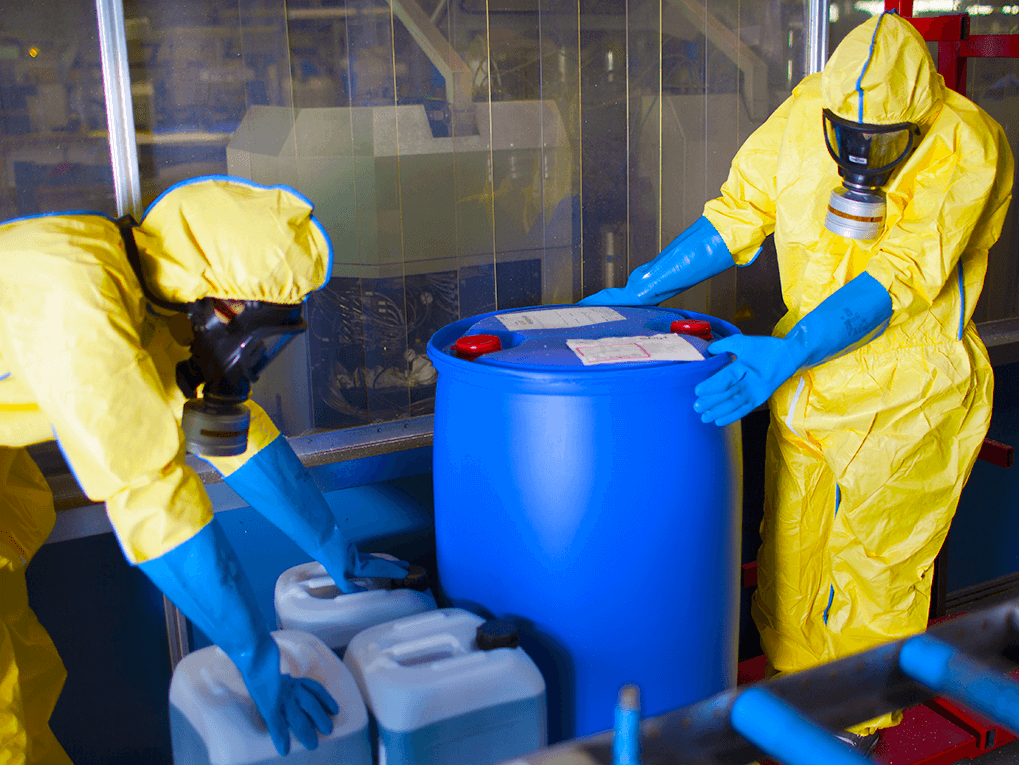
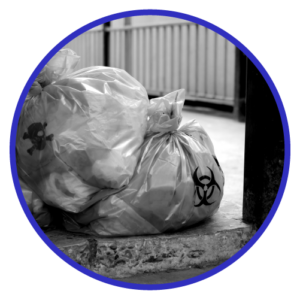
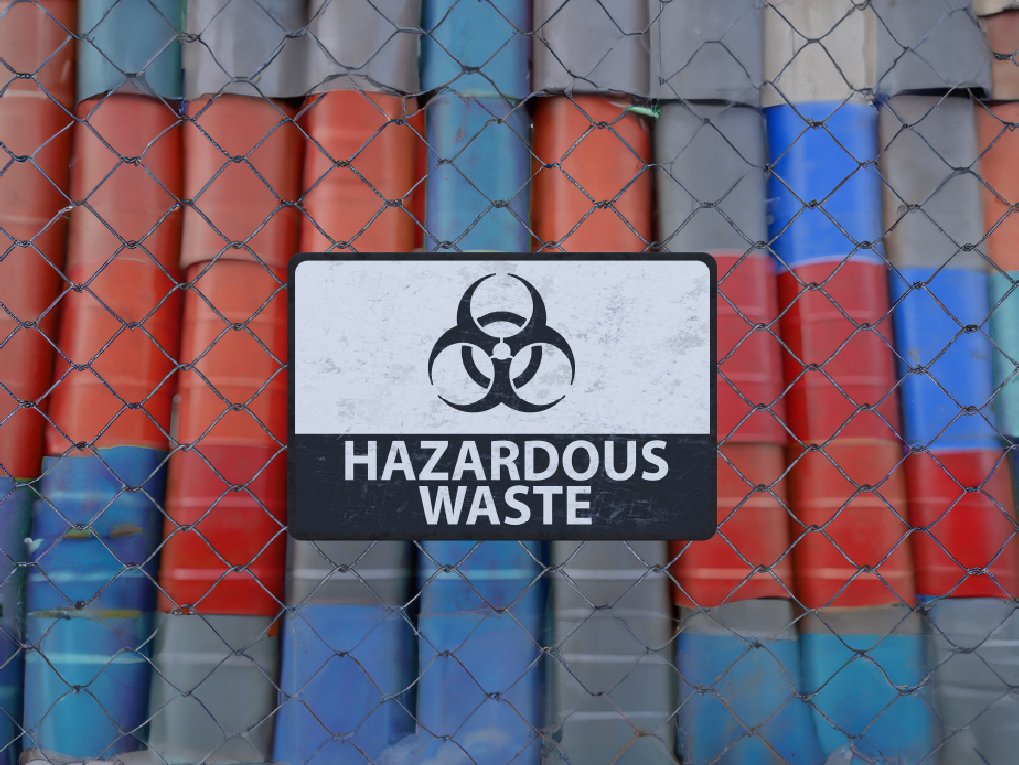
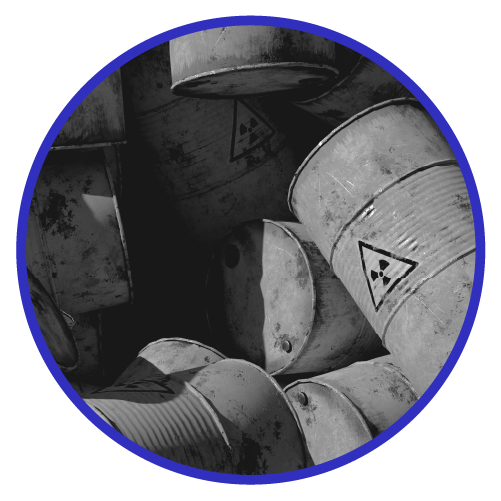
Chemical waste refers to any discarded material that either contains dangerous chemicals or has come into contact with them. This material can exist in various forms – solid, liquid, or gaseous – and may pose risks to human and environmental health.
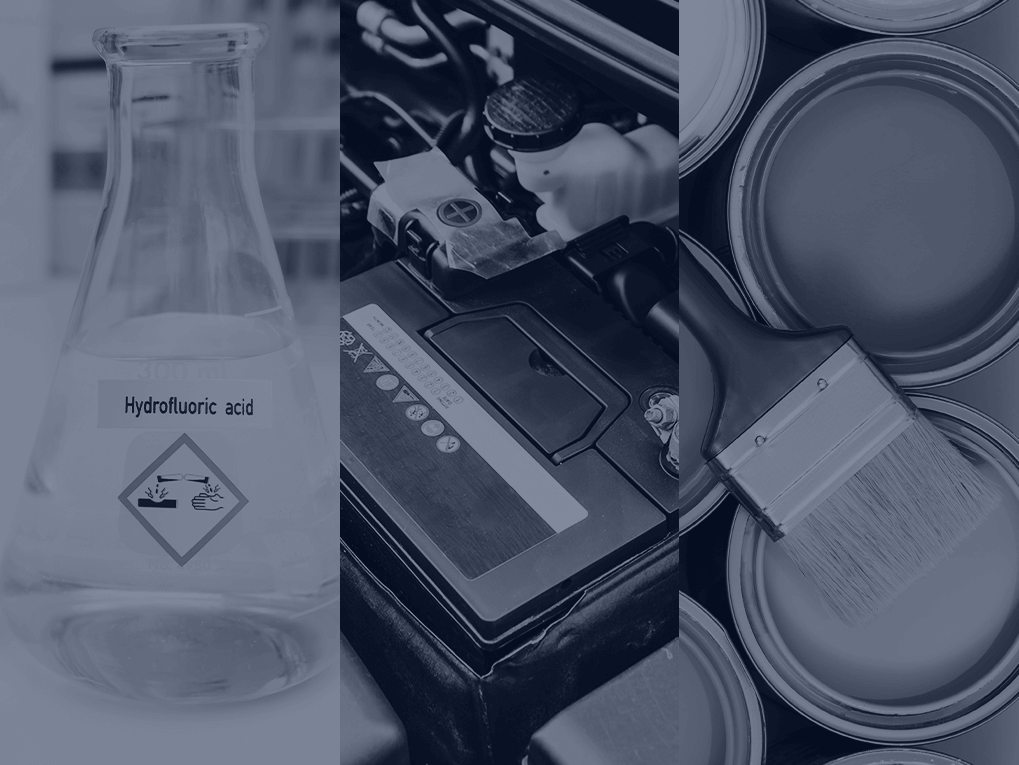
Examples of chemical waste range from substances with apparent hazards such as acids and pesticides, to seemingly safer but still potentially risky materials like cleaning products and paint.
So that’s the definition covered, but what about specific types of chemical waste? You might find some of them surprising…
Examples of Chemical Waste
A variety of chemical waste can be either hazardous or non-hazardous, and this type of waste isn’t limited to laboratories either – you can find chemical waste in everyday settings such as automotive garages and offices.
Whether you’re a lab technician, gardener, cleaner or you work in an administrative role, there’s a high probability you’ll come into contact with some form of chemical waste at some point in your working day – understanding what classifies as chemical waste is crucial for ensuring all waste is appropriately segregated before disposal.
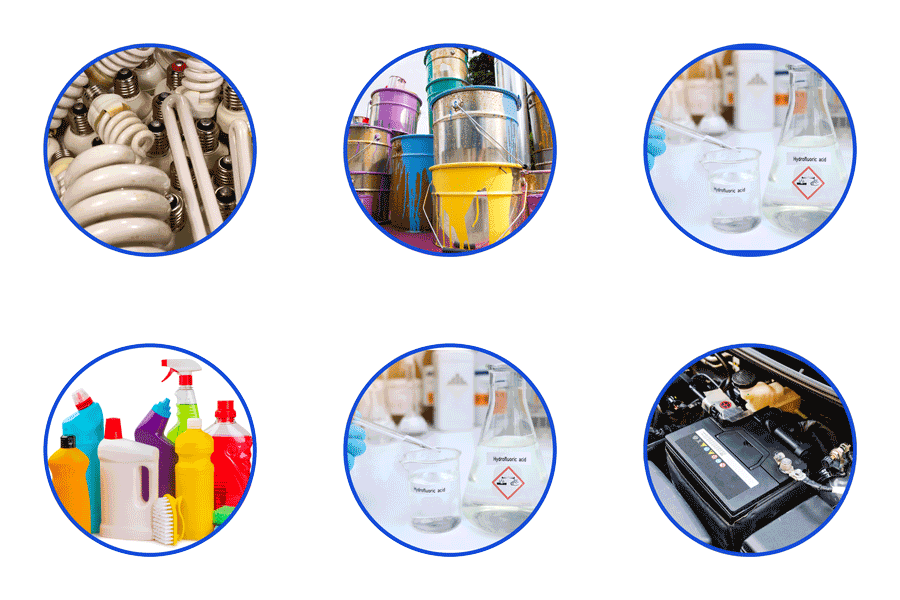 Common types of chemical wastes include:
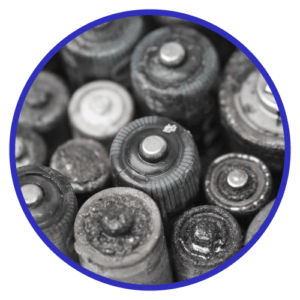
- Batteries ranging from household ones to car and machinery batteries.
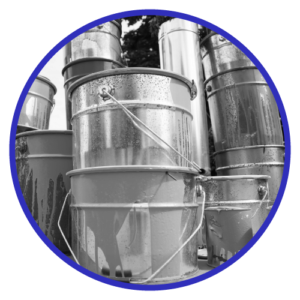
- Chemical containers or packaging contaminated due to contact with chemicals.
- Cleaning products like detergents, disinfectants, and sprays.
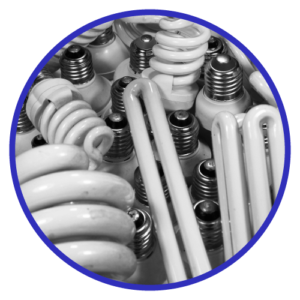
- Fluorescent light bulbs containing argon, xenon, neon, and mercury vapour.
- Paints such as emulsion, gloss, primer, etc.
- Printer toner and ink cartridges including empty ink cartridges considered contaminated by contact with chemicals.
- Pesticides such as insecticides, fungicides, herbicides, and biocides.
- Solvents like acetone, ethanol, methanol.
- Waste oils including diesel, kerosene, gearbox oil and other types.
- Waste Electrical and Electronic Equipment (WEEE) products and their internal components.
- Used aerosol cans such as deodorants, air fresheners, and more.
If you have chemical waste you’re unsure about or want to get rid of any of the above items, don’t hesitate to reach out to us.
Where Does Chemical Waste Go?

For a long time, the norm was for companies to send their chemical waste to landfill. The biggest problem with that methodology is the environmental damage it can cause, risking leaks into the surrounding ground or water and causing pollution.
Nowadays, however, there are alternative methods available for chemical waste disposal, depending on the type of chemicals involved, these include:
- Reclamation: This involves removing and recycling chemical waste products like mercury from items such as broken thermometers.
- Dewatering: This method is suitable for oil waste, separating the oil from water for proper disposal.
- Filtering and distilling: Filtering eliminates additives or inorganic materials, whilst distilling refines oil through boiling. Both processes enable the reuse of oil in some capacity.
- Chemical treatments: Certain types of chemical waste, such as sulphuric or hydrochloric acids can be repurposed after undergoing specific chemical treatments.
- Thermal treatments: Applying heat helps sanitise waste products, ensuring the safe and secure disposal of chemical waste.
 What’s The Safest Way to Store Chemical Waste?
Regardless of whether the waste is classified as hazardous or non-hazardous, it’s crucial to manage, store, and dispose of chemical waste securely and in accordance with safety guidelines.
To ensure compliance with chemical waste disposal regulations and safe storage within your facility before collection, it’s essential to adhere to the following guidelines:
- Exercise caution and care in handling chemical waste and/or products both before, during, and after use.
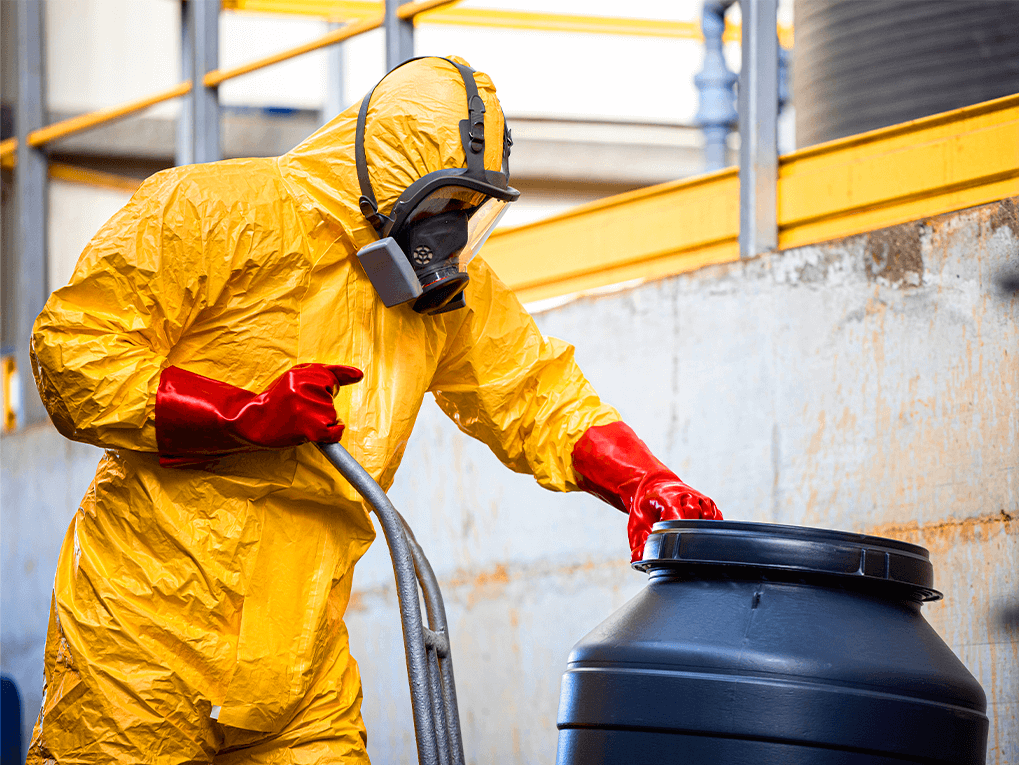
- Any person interacting with chemical waste and/or products must wear appropriate personal protective equipment (PPE) and adhere to health and safety protocols.
- Store chemical waste at a designated location within your facility, inaccessible to the general public, such as a locked or concealed area.
- Ensure the separation of chemical wastes from other hazardous materials and place them in appropriate chemical waste bins and containers. Regularly inspect these containers to confirm they remain undamaged.
Doing so will keep you compliant with government chemical waste disposal regulations such as the Control of Substances Hazardous to Health (COSHH).
 Regulations and Guidelines for UK Chemical Waste Disposal
Companies looking for chemical waste disposal in the UK fall under the broader framework of waste management and environmental protection laws. All producers of chemical waste are subject to regulations that govern the handling, storage, transportation, and disposal of hazardous waste, including chemical waste.
The key regulations and guidelines for chemical waste disposal include:
- The Environmental Protection Act 1990 (EPA)
- The Hazardous Waste (England and Wales) Regulations 2005
- The Control of Substances Hazardous to Health (COSHH)
- The Waste Electrical and Electronic Equipment (WEEE) Regulations
- The Chemicals (Hazard Information and Packaging for Supply) Regulations 2009 (CHIP)
All businesses must adhere to these regulations to ensure the safe and environmentally responsible disposal of chemical waste.
Check out our Compliance page for more helpful links and additional information about hazardous waste compliance and regulatory guidance.
Which Business Types Produce Chemical Waste?
Various businesses across the UK produce chemical waste necessitating proper disposal solutions, ranging from empty ink cartridges and expired hand sanitisers to specialist laboratory chemical waste packing.
Some of the main business types in need of chemical waste collection and their most common waste types include:
- Pharmaceutical Manufacturers – Unused chemicals, expired pharmaceuticals, and materials involved in the manufacturing process.
- Laboratories – Chemical waste containers, products containing mercury, solvents, resins, acids, and dyes.
- Healthcare Facilities – Clinical waste, chemicals, cleaning products, disinfectants, and sharps waste.
- Industrial and Manufacturing – Industrial solvents, waste oils, brake fluids, and production materials.
- Construction Companies – Paints, adhesives, and construction materials.
- Land Developers – Fertilisers, pesticides, landscaping, soil treatment, site preparation, and construction-related chemicals.
- Car Garages and Workshops – Used oils, brake fluids, and cleaning agents.
- Dry Cleaners – Cleaning agents such as perchloroethylene (PERC).
- Farms and Agricultural Companies – Pesticides, fertilisers, brake fluids, and waste oils.
Looking for Chemical Waste Support?
Whether you’ve got chemical waste that needs collecting, you need help to identify and label your waste, or you have a waste-related question – don’t hesitate to contact us today.

 A
A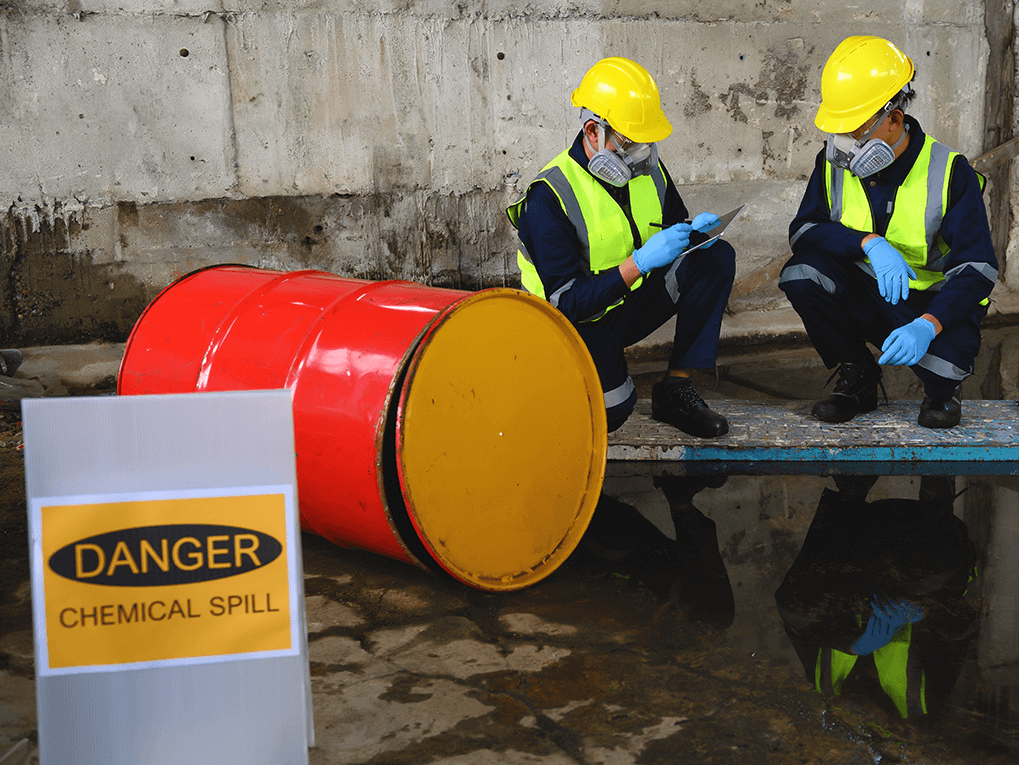
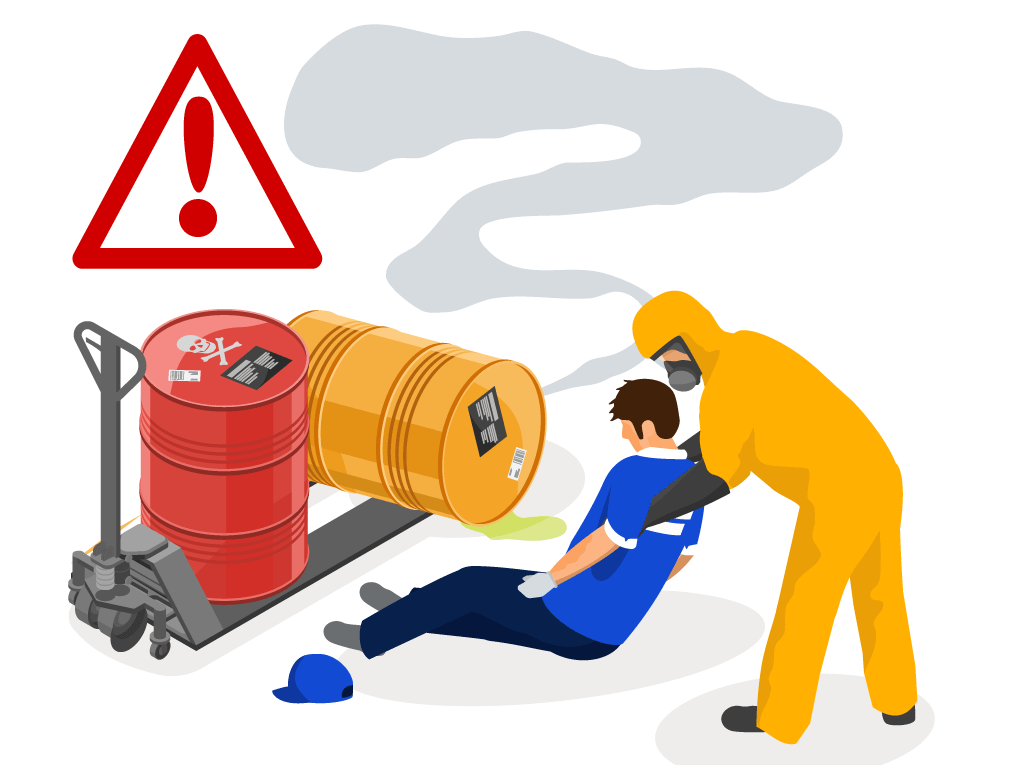
 It’s essential to outline a plan for hazardous waste emergencies so that you’re prepared when they happen. Sudden hazardous waste emergencies can pose a risk to health and the environment due to their toxic effects and potential exposure to hazardous chemicals.
 The safety of everyone in the surrounding area in case of a hazardous waste emergency is paramount. The evacuation plan is initiated by sounding the emergency alert. This leads people to their designated safe places or assembly points, away from the hazardous waste. Your occupational safety plan must also include individuals with disabilities and detailed routes that avoid the affected area.
 When a fire breaks out, only trained individuals should respond swiftly, using designated firefighting equipment stored in accessible storage areas. Your appointed fire wardens must have location plans for fire hoses, extinguishers and water sources.
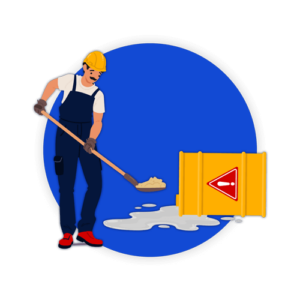 Next, you must contain the release of hazardous substances to prevent the spread. There are several ways to do this, including dry sand, sawdust, proprietary booms, and absorbent pads.
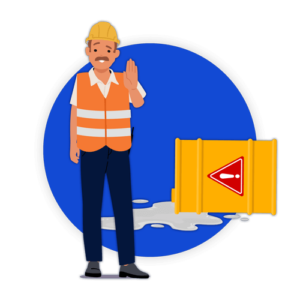 Once you’ve contained the spill, your focus needs to shift towards stopping any further contamination to the environment.
 Spill containment and cleanup is usually safer than trying to neutralise waste in situ. With neutralisation, you’re adding more chemicals into the spill, leading to an increased risk of non-containment. You also run the risk of secondary reactions and the evolution of heat/gas.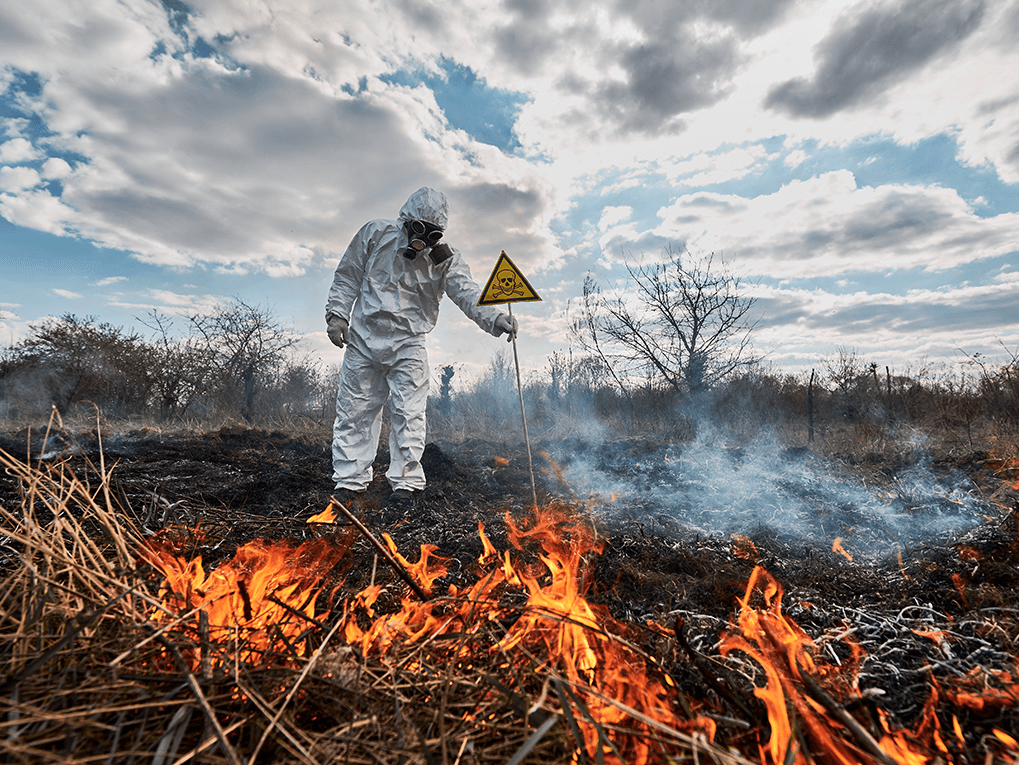

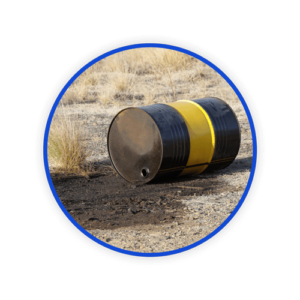 Soil contamination is another significant consequence of hazardous waste mismanagement. Heavy metals, chemical waste spills, and agricultural runoff deposit harmful substances in the soil. These substances can remain in the soil for years, eventually altering the soil’s composition and fertility. This degradation impacts plant growth and crop yields, decreasing biodiversity and disrupting soil health.



 We’ve grown.
 Compliance
 Reliability
 Expertise
 Accessibility
 Transparency
 Our new design overhaul began with us paying homage to our brand origins. The new Hazport logo retains the shape-blocked design that’s been our insignia for many years, but it’s been modernised with an edgier typeface and more playful colour tones.
 As a reminder, we’re still able to guide and support your business with: